The New YorkTimes published a column by its leading financial experts, GretchenMorgenson and Louise Story, on November 22, 2011 which contains a spectacularcharge against the Obama administration’s financial regulatory leaders. I have waited for the rebuttal, but it is nowclear that the administration does not contest the charge.
The specific example that prompted the NYT article (“Financial Finger-PointingTurns to Regulators”) was a civil action against a former executive ofIndyMac. IndyMac was supposed to beregulated by the Office of Thrift Supervision (OTS). OTS was the worst of the federal financialregulators – which is a large statement. It was so bad that the Dodd-Frank Act killed it. I used to work for OTS. One of the things Idid to make myself unemployable during the S&L debacle was to testifybefore Congress against the head of our agency, Danny Wall, and our head ofsupervision, Darrell Dochow. Wall resignedin disgrace and Dochow was demoted and sent back to run the obscure office hehad once run in Seattle.
Ms. Story and Ms. Morgenson’s column discusses howan IndyMac manager is defending himself against suit by arguing that Dochowtold him to file false financial statements. OTS’ senior leaders knew from my book exactly what they were gettingwhen they promoted Dochow and made him the top (anti) regulator for all the topS&L originators of fraudulent liar’s loans.
This column addresses a more general point, thecharge that Obama’s financial regulatory leaders actively oppose theprosecution of elite financial criminals and the regulators who conspired withthem (to use the term the article quotes Professor Kane as insisting upon).
These charges are exceptionally severe. Senior former regulators are willing to be quoted by name asserting that Obama’s (not Bush’s) financial regulatory leaders are blocking lawsuits against fraudulent financial elites and their anti-regulatory co-conspirators because they fear embarrassment. That would be a disgraceful policy. Indeed, it is hard to think of a worse reason for granting the elite white-collar criminals that caused the crisis and the Great Recession immunity from prosecution. The fact that Obama has no response rebutting this grave charge against this administration’s integrity sounds loud, but not proud.
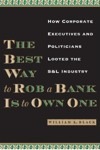
Bill Black is the author of The Best Way to Rob a Bank is to Own One and an associate professor of economics and law at the University of Missouri-Kansas City. He spent years working on regulatory policy and fraud prevention as Executive Director of the Institute for Fraud Prevention, Litigation Director of the Federal Home Loan Bank Board and Deputy Director of the National Commission on Financial Institution Reform, Recovery and Enforcement, among other positions.
Bill writes a column for Benzinga every Monday. His other academic articles, congressional testimony, and musings about the financial crisis can be found at his Social Science Research Network author page and at the blog New Economic Perspectives. Follow him on Twitter: @WilliamKBlack